


Click here for announcements before 2024
In recent years, polymer and plastic materials have often been portrayed as the root cause of environmental problems. However, modern society greatly benefits from these materials. Beyond the everyday plastic products we see around us, polymers are essential in high-performance materials used in electronics, aerospace, and medical fields. Even inside smartphones, polymers play a crucial role. It is clear that building a social system that completely avoids the use of polymer materials would be extremely difficult.
In fact, research on environmentally conscious polymers has been ongoing for several decades, and various technologies and materials have been developed. However, as mentioned above, polymer materials are deeply intertwined with industry. Unless environmentally friendly materials can match or exceed existing materials in terms of production cost and physical or chemical properties, it is difficult for them to be adopted in real-world applications. Many promising developments have struggled to overcome this challenge.
Recently, however, a global shift in thinking has begun. Across various fields, there is growing momentum to transition from an economy based on mass consumption of energy and materials to a circular economy. This trend is also strongly influencing the polymer industry, which has long been tied to the growth of petrochemical manufacturing. There is increasing interest in polymer materials derived from renewable resources, as well as in the development of recyclable and circular materials.

Our laboratory aims to realize a society in which polymer materials circulate sustainably, through the application of organic chemistry and polymer chemistry. For example, polyethylene terephthalate (PET), commonly used in beverage bottles, remains stable over long periods and therefore must be recycled to prevent environmental leakage. On the other hand, biodegradable polymers such as polylactic acid (PLA) are considered environmentally friendly due to their ability to break down naturally. However, their tendency to degrade over time presents a trade-off in terms of material lifespan.
For this reason, one ideal form of polymer material system is one that can be used stably for a certain period and then be intentionally degraded and reused at a desired time. Developing such systems is a key challenge and aspiration in the field of sustainable polymer chemistry.
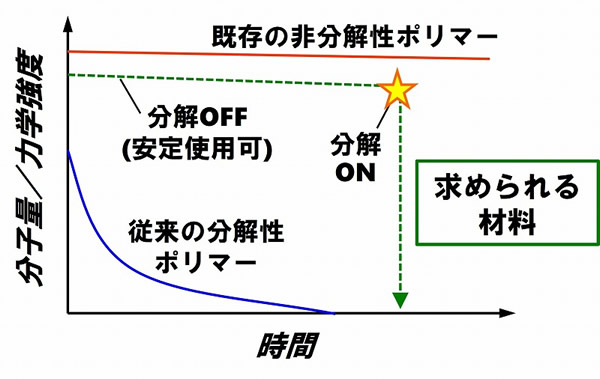
To realize and achieve such material systems, our lab is actively engaged in the following three areas:
1) Functional enhancement of degradable polymers
2) Creation of functional materials through self-assembly
3) Upcycling of existing polymers
For more details, please see our Research Topics.
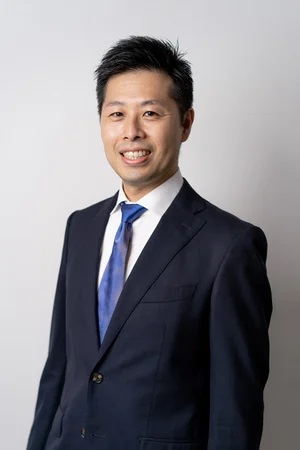
Kazuki Fukushima, Ph.D. (Engineering)
Originally from Itami, Hyogo Prefecture. After earning his degree at Kyoto Institute of Technology, he worked as a researcher at Stanford University and IBM Almaden Research Center. He then served as Assistant Professor at Yamagata University and Associate Professor at the University of Tokyo, before returning to Kyoto Institute of Technology as a full professor. Currently resides in Kyoto.
Expertise: Polymer synthesis, functional polymers, biodegradable polymers, self-assembly
Hobbies: Walking (I used to run full marathons 10 years ago—now it’s a bit too much), basketball (played in junior high and high school—also retired).
For high school and technical college students and teachers:
We are always open to outreach lectures and lab visits. Please feel free to contact us anytime.
What I always keep in mind in my research—if I were to put it elegantly—is “creating things that are kind to the Earth and to people.” This “kindness” includes many types of gentleness. Of course, reducing environmental impact and health risks is essential, but I also want to consider economic feasibility and ease of use. Most of my research is still far from gentle, but I believe that striving toward this ideal is the true meaning and joy of conducting fundamental research at university. If this resonates with you, I’d love to hear from you. I hope we can enjoy chemistry together.
After graduating from this university, I’ve had the opportunity to work at various research institutions and universities. Looking back, I truly believe that this university offers an excellent research environment. We have a wide range of shared analytical instruments that are easily accessible, and our lab is well-equipped—most experiments can be completed right here on campus. The campus is conveniently located: less than 30 minutes by subway from Kyoto Station and just a 5-minute walk from Matsugasaki Station. The nearby Kitayama area is full of stylish shops, and historic temples and shrines are scattered within cycling distance—perfect for spontaneous sightseeing. Personally, I feel the campus buildings and facilities have a certain charm to them. It’s a wonderful environment that blends focused research with refreshing breaks. Why not enjoy chemistry with us in this inspiring setting?
・You’ll hear stories from various research institutions and universities
・Opportunities for overseas research exchange
→ We’ve sent students to labs in the UK and Spain.
・Presentation awards at academic conferences
→ Students I’ve mentored have received awards at events like the CSJ Chemistry Festa and the Polymer Discussion Meeting.
・Strong career prospects
→ We’ve conducted multiple joint research projects with industry partners.
Above all, I want students to enjoy chemistry and have fun doing research. I’m here to support you in that journey.